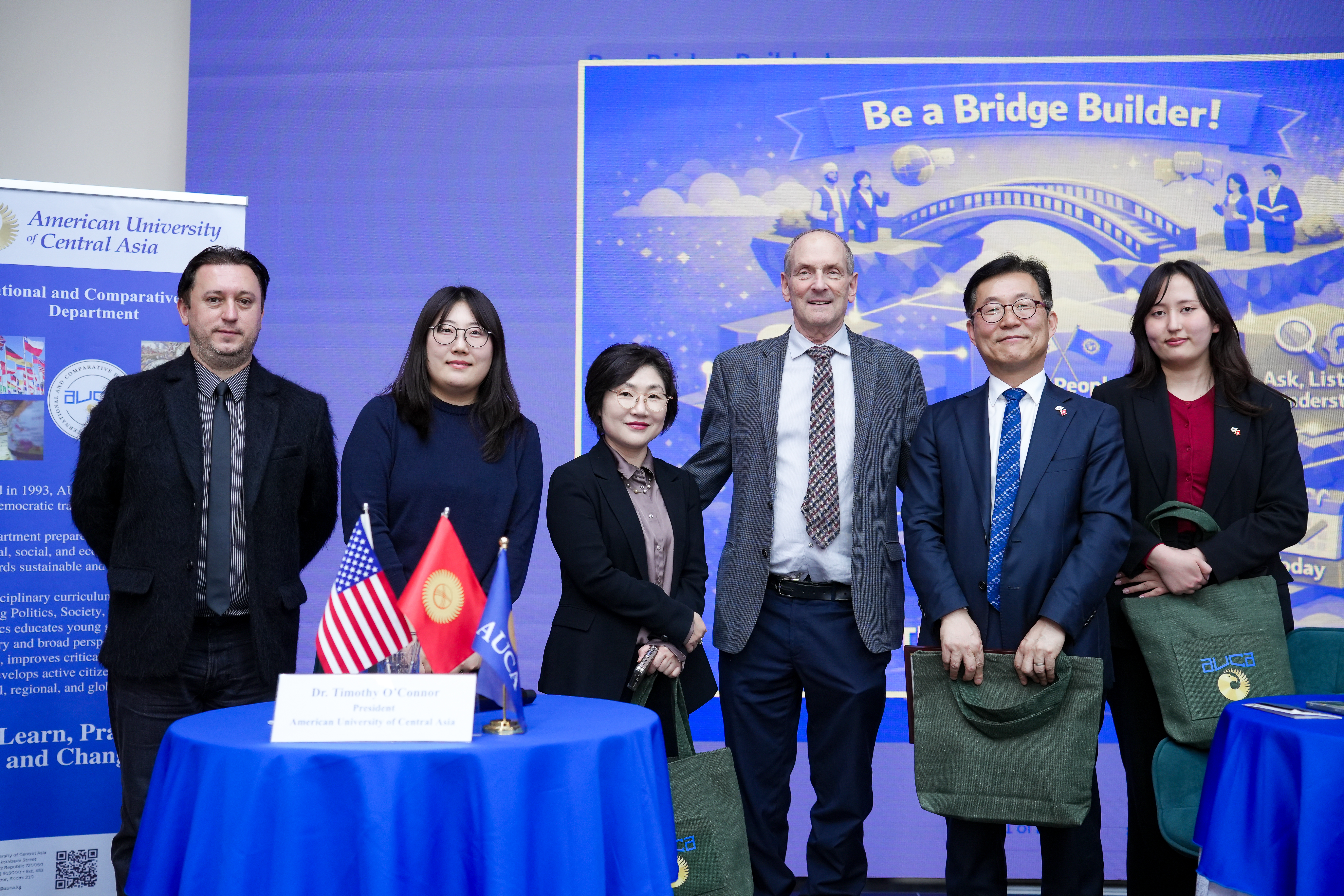
ICP Ambassador Talks with Mr. Kim Kwangjae: “The Development of Bilateral Relations between the Republic of Korea and the Kyrgyz Republic”
March 30, 2026

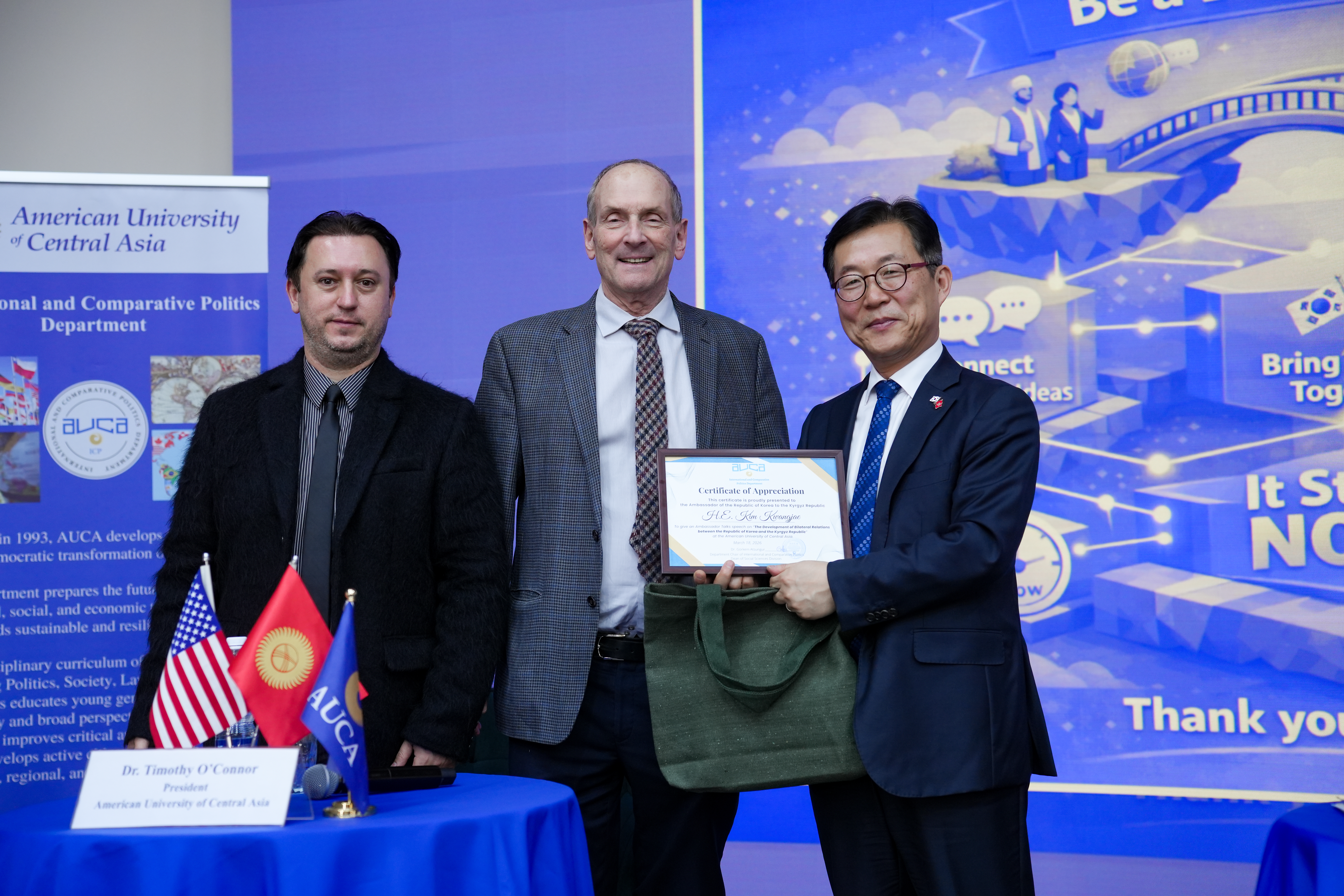
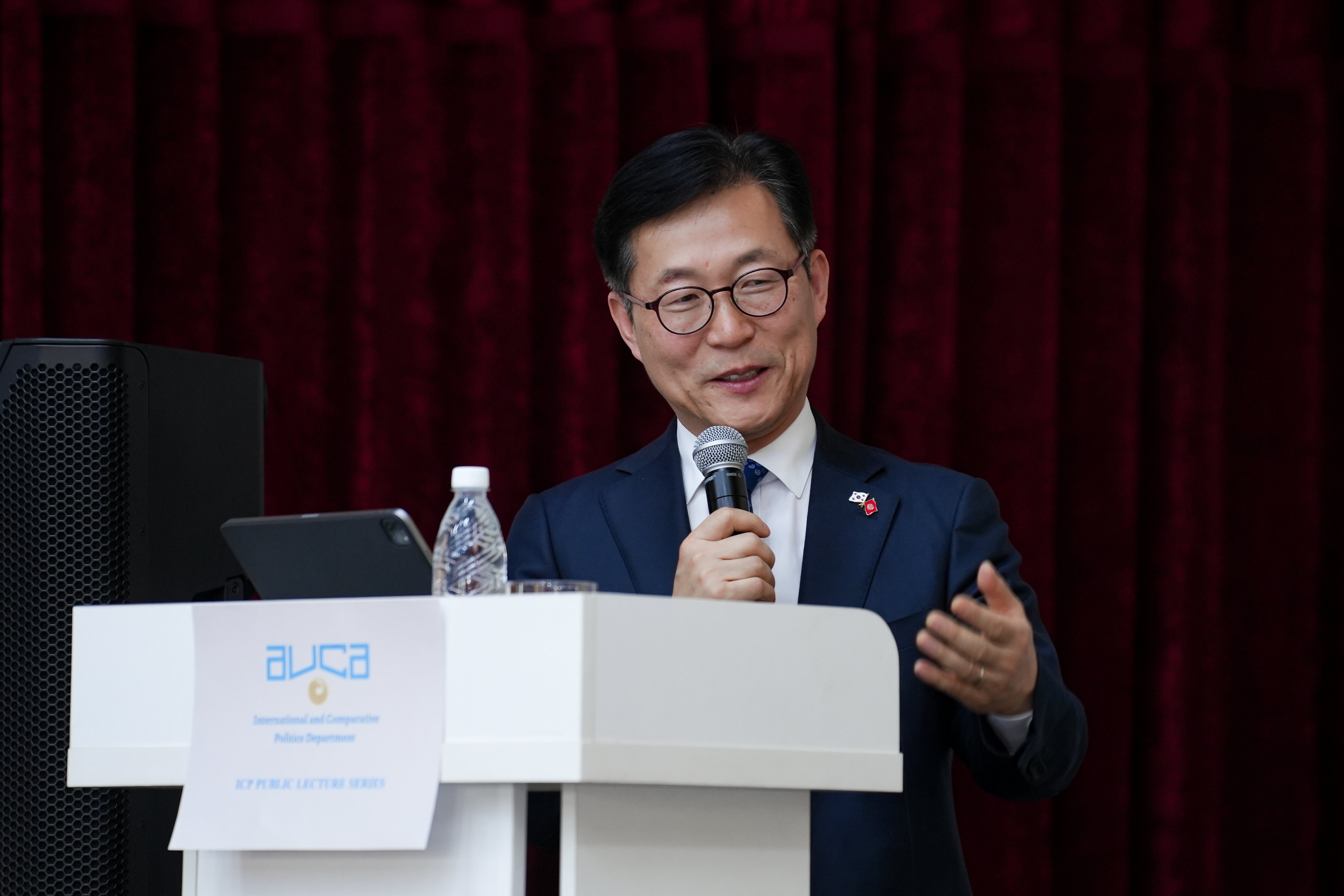
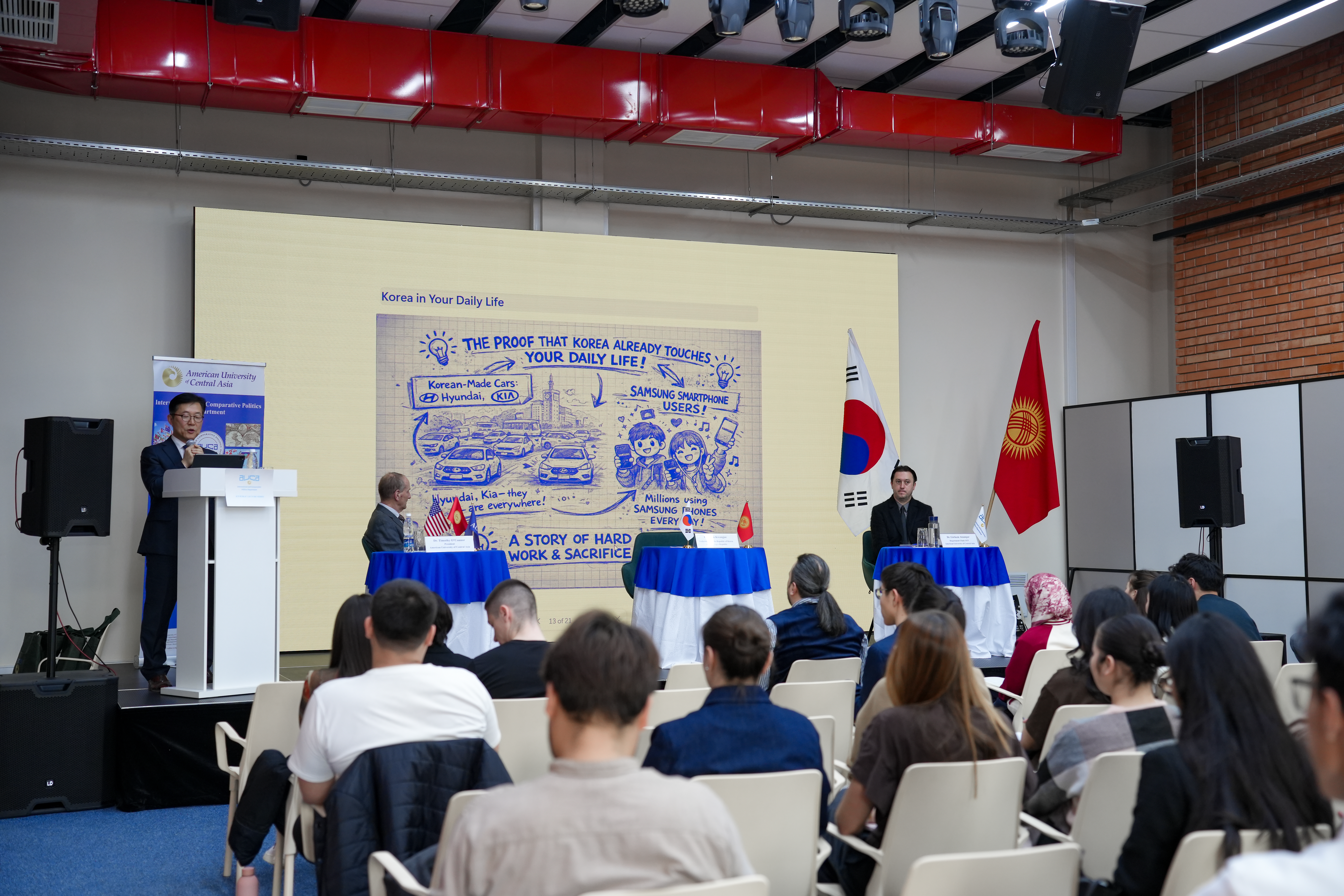
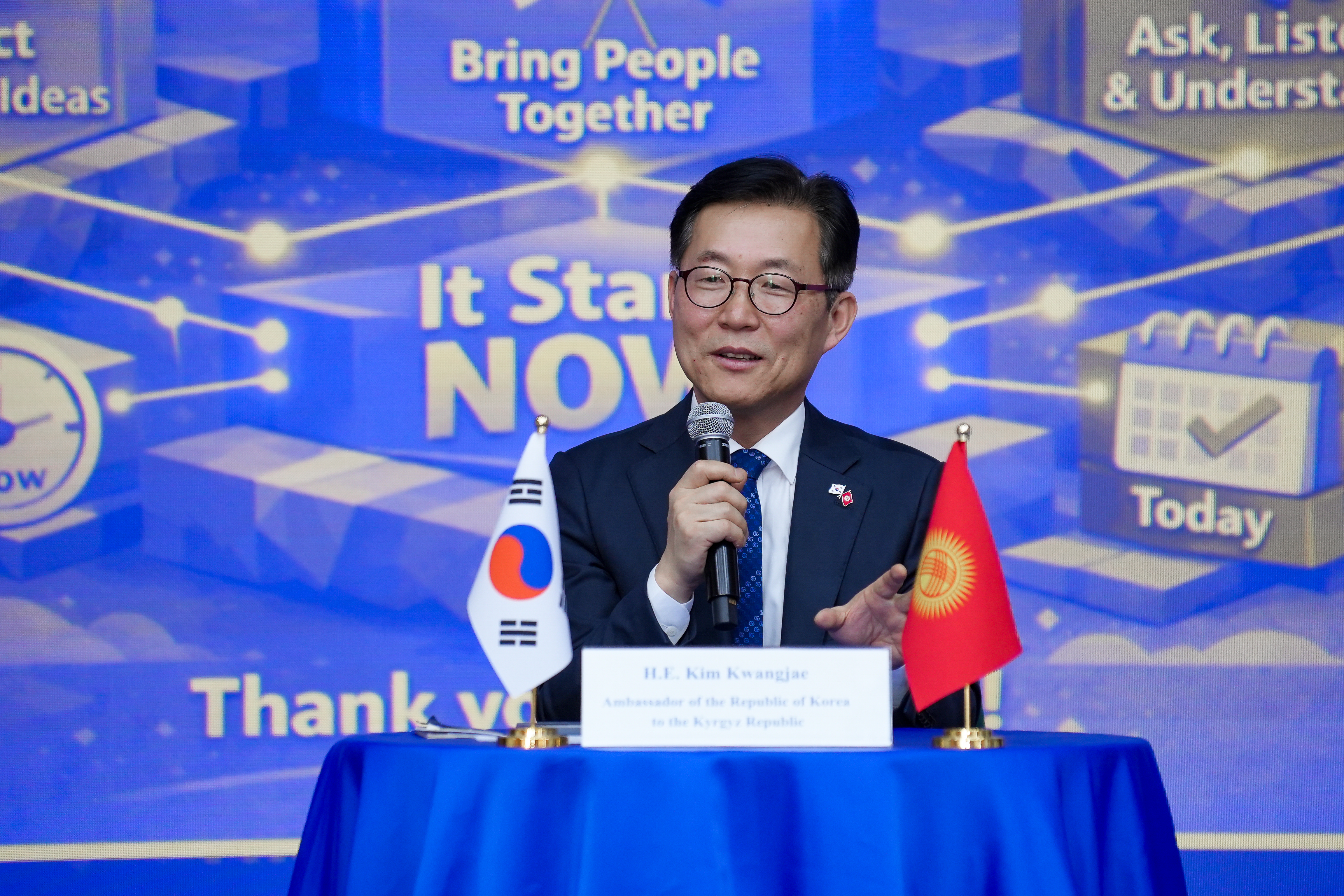
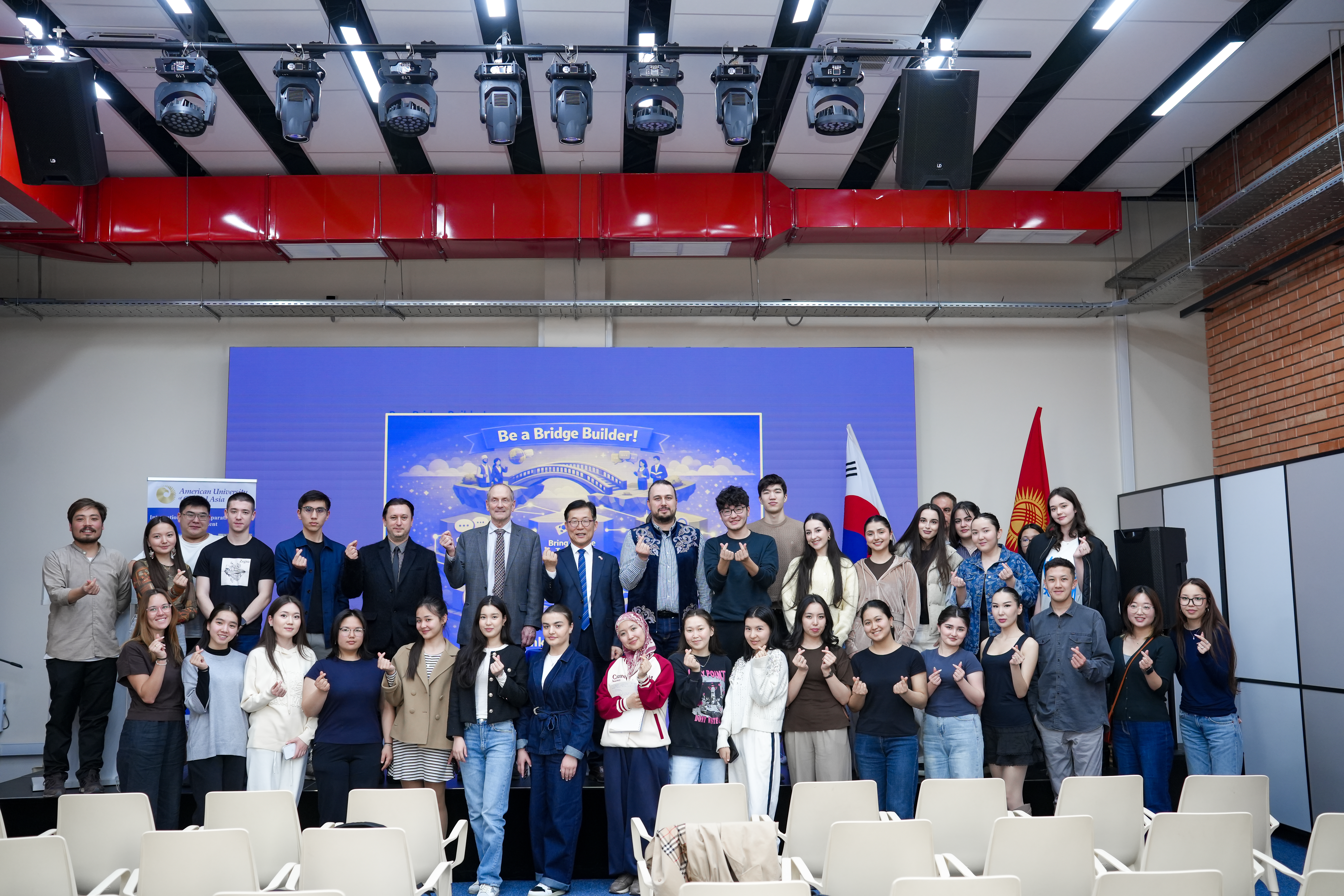
The American University of Central Asia (AUCA) hosted a distinguished session of the ICP Ambassador Talks featuring Mr. Kim Kwangjae on March 18th, who delivered a comprehensive lecture on the development of bilateral relations between the Republic of Korea and the Kyrgyz Republic. The talk highlighted the historical depth, contemporary cooperation, and future prospects of this evolving partnership.
Connected Across Centuries
Mr. Kim began by tracing the historical roots of Korea’s connections with Central Asia, referencing early interactions dating back to the era of the Goguryeo Kingdom. These long-standing links demonstrate that Korea and the Central Asian region have been connected not only geographically, but also culturally and historically across centuries.
A significant part of this shared history is embodied in the experience of the Koryo Saram—ethnic Koreans who were relocated to Central Asia in the 1930s. In Kyrgyzstan, Koryo Saram communities have, over the past century, become an integral part of society, contributing to the country’s cultural diversity and economic development while maintaining their heritage. Today, they continue to serve as a bridge between the two nations.
Korea’s Transformation into a Global Powerhouse
The lecture further explored Korea’s remarkable transformation since the 1960s. Once a developing country facing economic hardship, the Republic of Korea has emerged as one of the world’s leading economies and a global innovation hub. Korean products and technologies have become an integral part of everyday life worldwide.
Mr. Kim emphasized three key drivers behind this transformation:
• Education, which laid the foundation for human capital development
• Technological advancement, enabling rapid industrialization and innovation
• Democracy, ensuring institutional stability and inclusive growth
These pillars have shaped Korea’s development trajectory and continue to inform its international cooperation strategies.
The K-Initiative: Growing Together with Kyrgyzstan
Building on its development experience, Korea has launched initiatives aimed at fostering mutual growth with partner countries, including Kyrgyzstan. Within this framework, cooperation has focused on:
• Modernizing electoral systems to strengthen democratic institutions
• Supporting digital governance, including the development of an e-parliament
• Advancing education and innovation through IT schools and smart development programs
These initiatives reflect a partnership based on shared knowledge, mutual respect, and long-term collaboration.
Co-Creation and Sectoral Cooperation
Mr. Kim highlighted the importance of co-creation as a guiding principle of Korea–Kyrgyzstan relations. Rather than a one-sided approach, both countries work together to address shared challenges and opportunities.
Key areas of cooperation include:
• Healthcare, with projects aimed at improving medical services
• Agriculture, focusing on sustainable and efficient practices
• Clean energy, supporting environmentally responsible development
Such collaboration strengthens not only economic ties but also trust and people-to-people connections.
Looking Ahead: The 2026 Korea–Central Asia Summit
In conclusion, Ambassador Kim addressed the future of regional cooperation, emphasizing the significance of the upcoming 2026 Korea–Central Asia Summit. The summit is expected to open new avenues for partnership in areas such as innovation, digital transformation, and regional connectivity.
As Korea and Kyrgyzstan continue to deepen their diplomatic and developmental ties, the relationship stands as a model of how historical connections can evolve into strategic partnerships for the future.
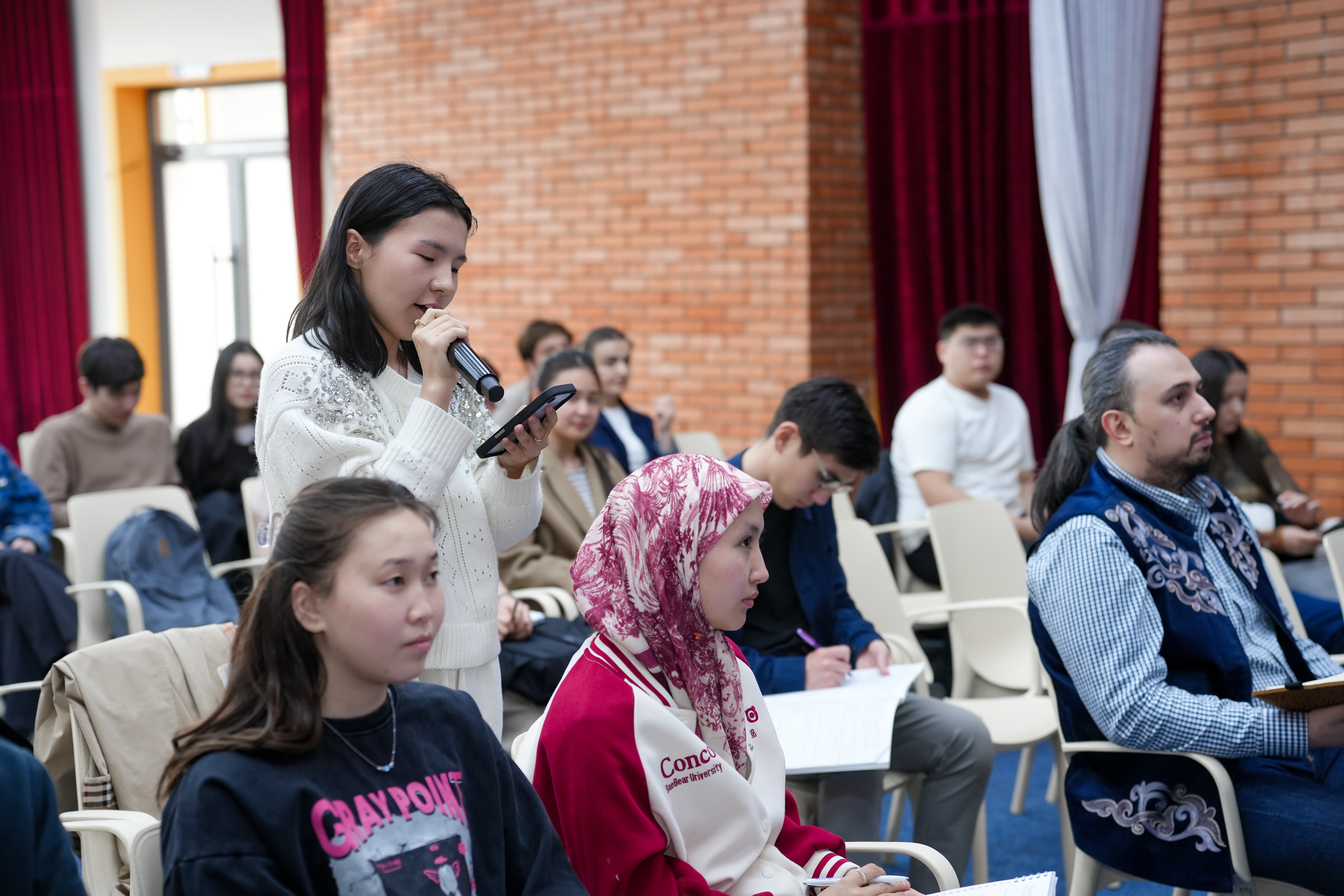
Q&A Session
The lecture concluded with an engaging Q&A session, during which students and faculty discussed:
• The applicability of Korea’s development model in the Kyrgyz context
• Opportunities for students in Korea–Central Asia cooperation initiatives
• The potential outcomes of the 2026 Korea–Central Asia Summit